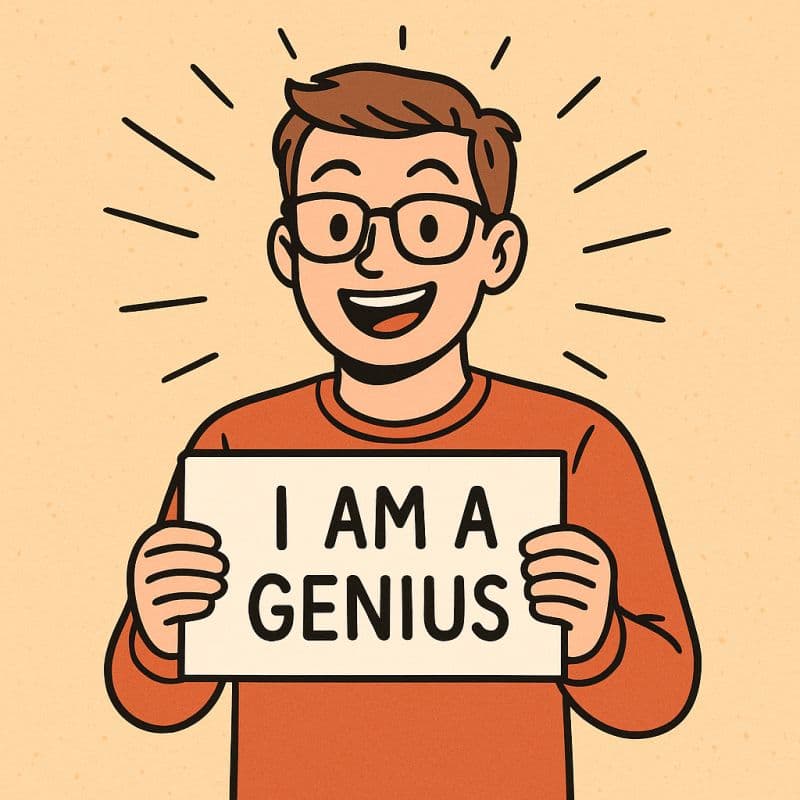
“I Am a Genius” 🧠🤖
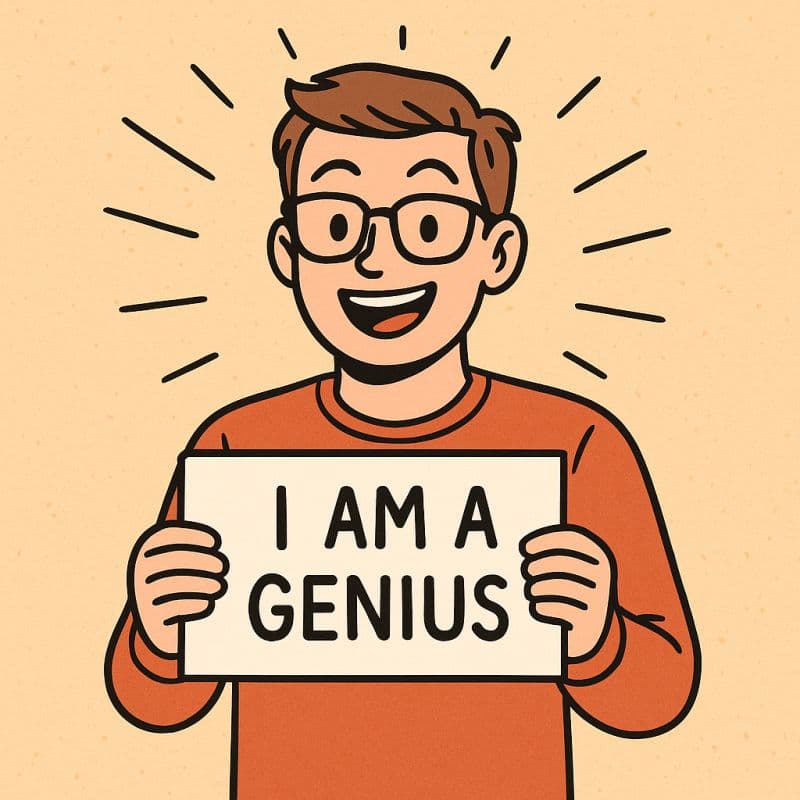
Recently, in a YouTube conversation about longevity, a British doctor mentioned something that truly caught my attention. He said that in recent years, he has been seeing an unusual new trend — young people coming to him saying they believe they are geniuses and asking for proof of it.
Recently, in a YouTube conversation about longevity, a British doctor mentioned something that truly caught my attention. He said that in recent years, he has been seeing an unusual new trend — young people coming to him saying they believe they are geniuses and asking for proof of it.
He also added that more and more parents now claim that their children are “gifted” or “genius-level.”
That made me wonder deeply: why do so many people today want to be seen as a genius?
⸻
The modern hunger for uniqueness
In earlier generations, social status came from visible things — beauty, wealth, athletic ability, or professional achievement. But in the digital age, these signals have become almost too common. With filters, self-branding, and online performance, nearly anyone can appear attractive or successful.
So people started looking for something else — a form of status that feels truly unique, untouchable, and internal.
And “being a genius” became that new status symbol.
⸻
Genius as identity, not intelligence
In many Western societies, especially in the U.S., being “gifted” has shifted from a psychological classification into an identity statement. It says:
“I see the world differently.” “I am not ordinary.” “My mind works in a special way.”
For some, this identity fills a silent emotional gap — a need to feel seen and significant in an overwhelming, algorithm-driven world. When you feel invisible among millions of profiles, claiming “I’m different” can feel like reclaiming meaning.
⸻
The role of social media and technology
Social media has amplified this phenomenon. Platforms reward uniqueness, intensity, and self-diagnosis. Entire online communities form around “giftedness,” “neurodivergence,” or “high intelligence,” often mixing genuine stories with identity-seeking narratives.
The message becomes seductive: If I don’t fit in, maybe it’s because I’m extraordinary.
But that can also create pressure — a silent competition of intellect, where “being special” replaces simply being.
⸻
What this really tells us
Perhaps the rise of the “I am a genius” movement is not about intelligence at all. It’s about loneliness, identity, and the search for validation in a world where every other measure of worth feels temporary or superficial.
To me, this is a mirror of our times: We live in a culture where being “normal” is no longer enough — and where being human might secretly feel less valuable than being exceptional.
⸻
My thought
Maybe the healthiest thing we can teach the next generation is that you don’t have to be a genius to live meaningfully. Curiosity, empathy, and consistency still build a far deeper kind of intelligence — one that doesn’t need to be proven.
⸻
#Psychology #Culture #Longevity #AIandHumanity #Identity #Society